News
Hearing is Believing?

2 Apr 2026
Dissertation on credibility in voice assistants successfully defended
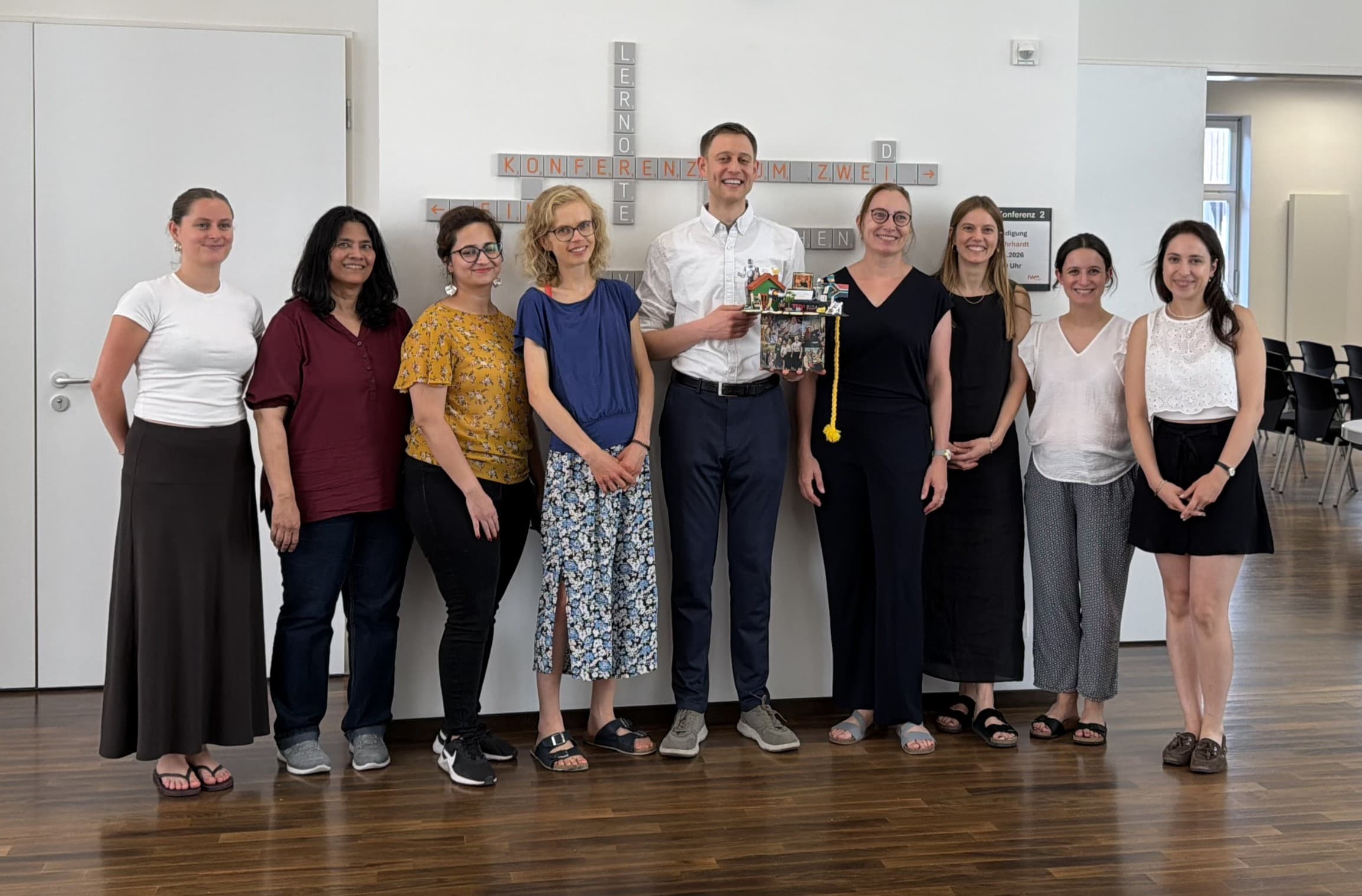
What happens when we don’t read information but receive it exclusively through speech - and perhaps place more trust in it than we should? Franziska Gaiser wrote her doctoral thesis on this highly topical question within the Everyday Media research group. In her dissertation “Hearing is Believing? Credibility assessments in voice-based information searches with smart speakers”, Franziska Gaiser investigated how this form of information search affects the assessment of credibility. She successfully defended her thesis in March.
The study focused on the observation that smart speakers such as Alexa often present information without visible sources – thereby creating new challenges for assessing credibility. Unlike with text-based search results, users are thus often deprived of a key basis for assessing the reliability of information. This issue is becoming increasingly important, particularly against the background of the growing prevalence of voice-based AI systems.
Using the MAIN model (Modality, Agency, Interactivity and Navigability) for evaluating information received through media, Franziska Gaiser investigated how characteristics such as purely auditory presentation, limited interactivity or certain linguistic features influence perceptions of credibility. Her findings show that whilst users appreciate the convenience of smart speakers, they rarely question the answers they receive. At the same time, identical information is rated as more credible when spoken rather than read – even when no source is cited.
The IWM alumna sees interactive verification functions as a potential approach to help users identify potentially false information. However, “their effectiveness depends on users actively engaging with these tools instead of simply accepting the initial spoken answer”.
Franziska Gaiser’s doctoral thesis makes it clear that voice search offers convenience, but also carries the risk that spoken answers may be accepted too uncritically. The findings provide important insights for the design of future voice-based technologies and human-like AI systems.