This project aims at understanding the cognitive and metacognitive processes that occur when users interact with AI systems – particularly in situations in which individuals use generative AI to inform themselves about scientific content. It adopts a cognitive perspective that places human users at the core of analysis. This research examines new forms of interaction between users and AI, asking how users process, interpret, evaluate, and integrate AI-generated information, and how these processes are shaped by the dynamic interaction between human cognition and AI behavior.
The research focus lies on the experimental analysis of new forms of interaction between users and AI, with the aim of investigating the psychological consequences of AI use for understanding, attitudes, and decision-making. Central questions concern the quality of interaction, adaptivity, and the effectiveness of knowledge transfer, as well as how users formulate questions, steer the interaction, and make sense of AI responses when engaging with scientific topics. Although the use of AI chatbots for learning about science has become increasingly common, it remains largely unclear how users actually proceed in these interactions, which cognitive strategies they apply, and which factors shape the resulting outcomes. To address these questions, the project systematically studies human-AI interaction processes from a psychological perspective. Experimental designs vary theoretically relevant influencing factors – such as prior knowledge, motivation, epistemic, and ideological attitudes, and interaction affordances – and examine their effects on users’ understanding, topic-related attitudes, acceptance, credibility, and trust perceptions, metacognitive monitoring, decision-making, and interaction behavior.
Part of the knowledge environment
Part of the labs
Duration
10/2026 - 09/2029
Funding
Volkswagen Foundation
Your contact person
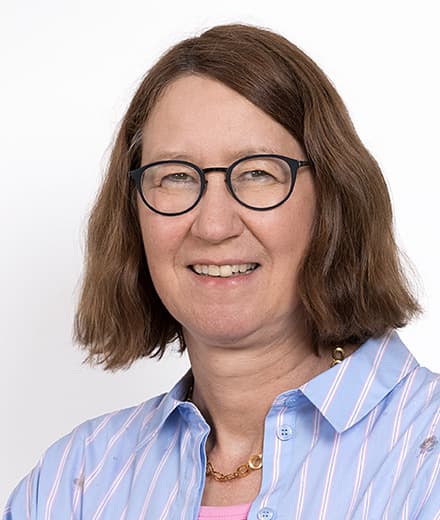
Executive Director
+49 7071 979-209u.cress@iwm-tuebingen.deParticipants




Cooperation partners
Prof. Dr. Annette Leßmöllmann & Dr. Monika Hanauska (KIT - Karlsruhe Institute of Technology)
Prof. Dr. Susanne Marschall & Dr. Erwin Feyersinger (University of Tübingen)
Dr. Markus Gottschling & Prof. Dr. Olaf Kramer (University of Tübingen)
Patrick Klügel & PD Dr. Nina Kalwa (University of Tübingen)