News
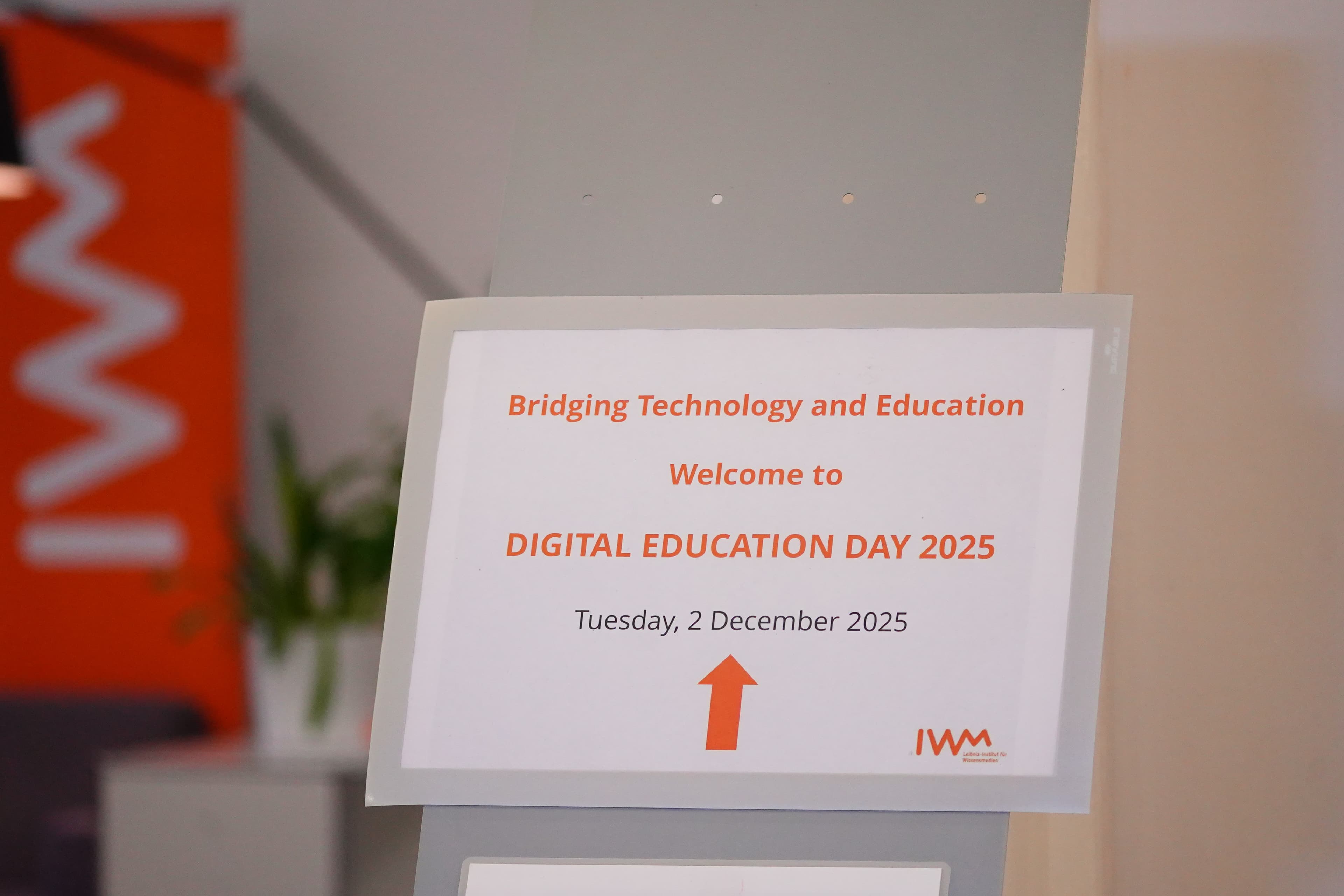
Digital Education Day 2025
8 Dec 2025
Bridging technology and education
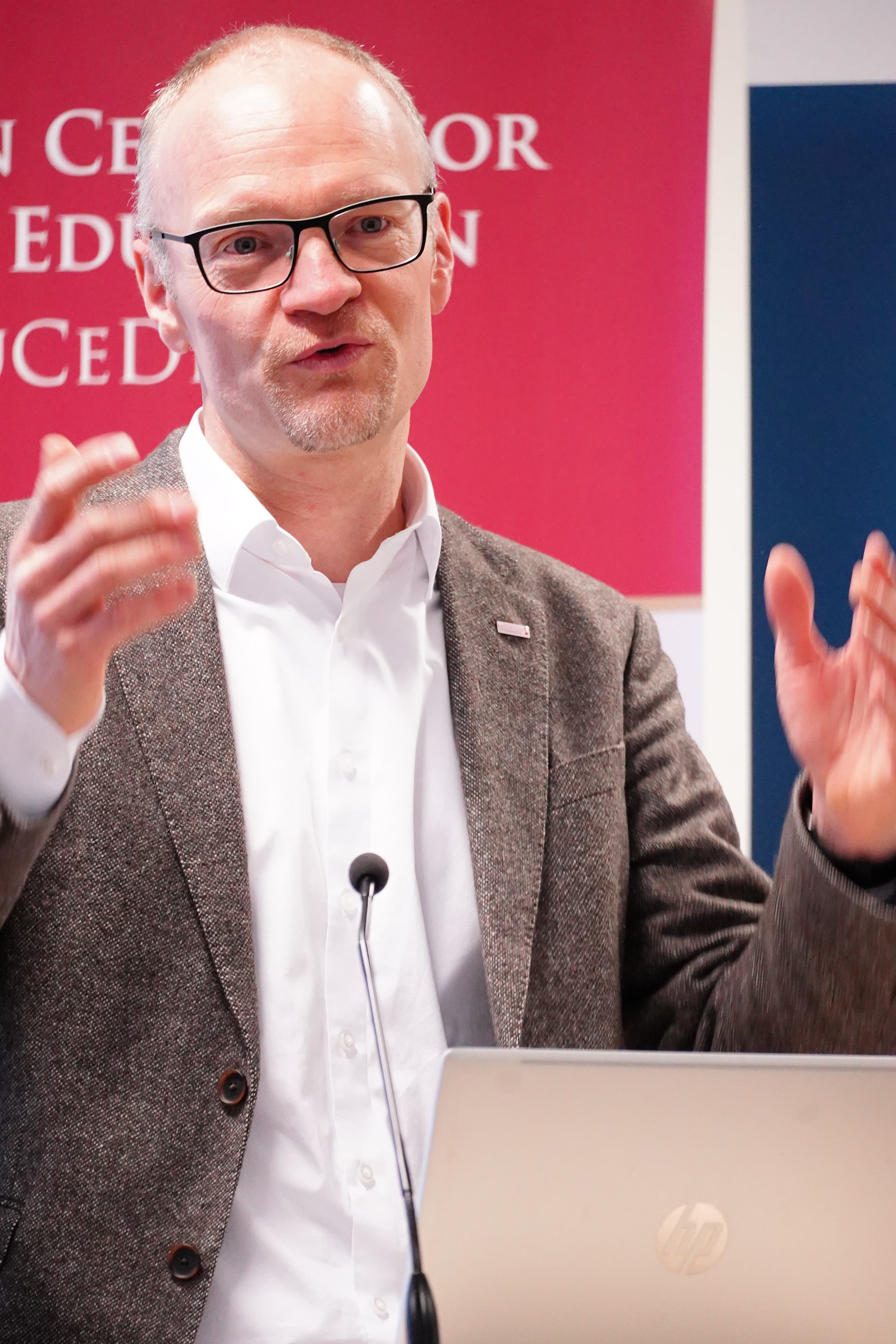
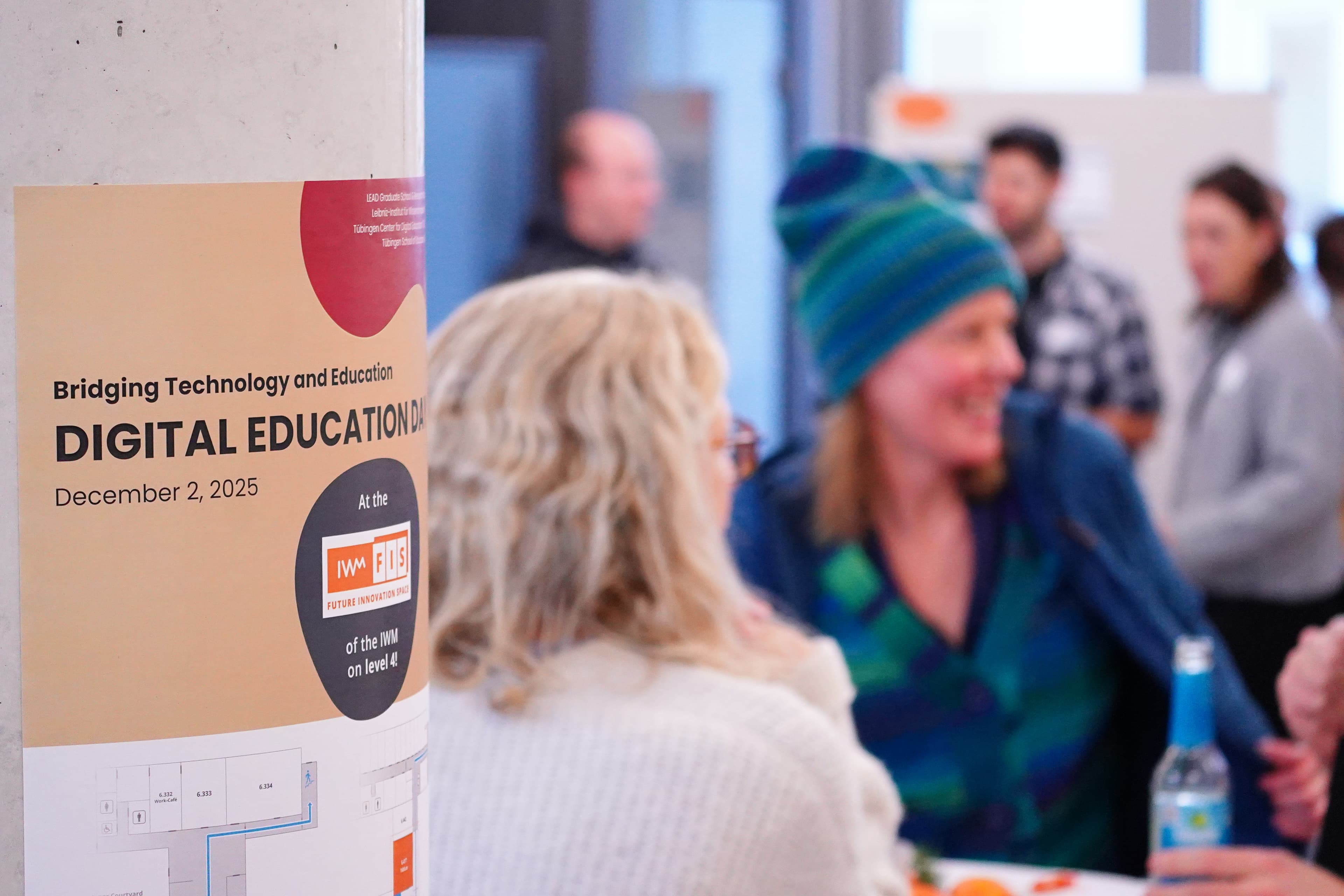
The Digital Education Day on 2 December 2025 at the IWM focused on the dynamic developments in the field of education, which are being driven in particular by the use of artificial intelligence (AI) but also by technologies such as Extended Reality (XR). Under the motto ‘Bridging Technology and Education’, the focus was on interdisciplinary collaboration at the interface between educational science and technology.
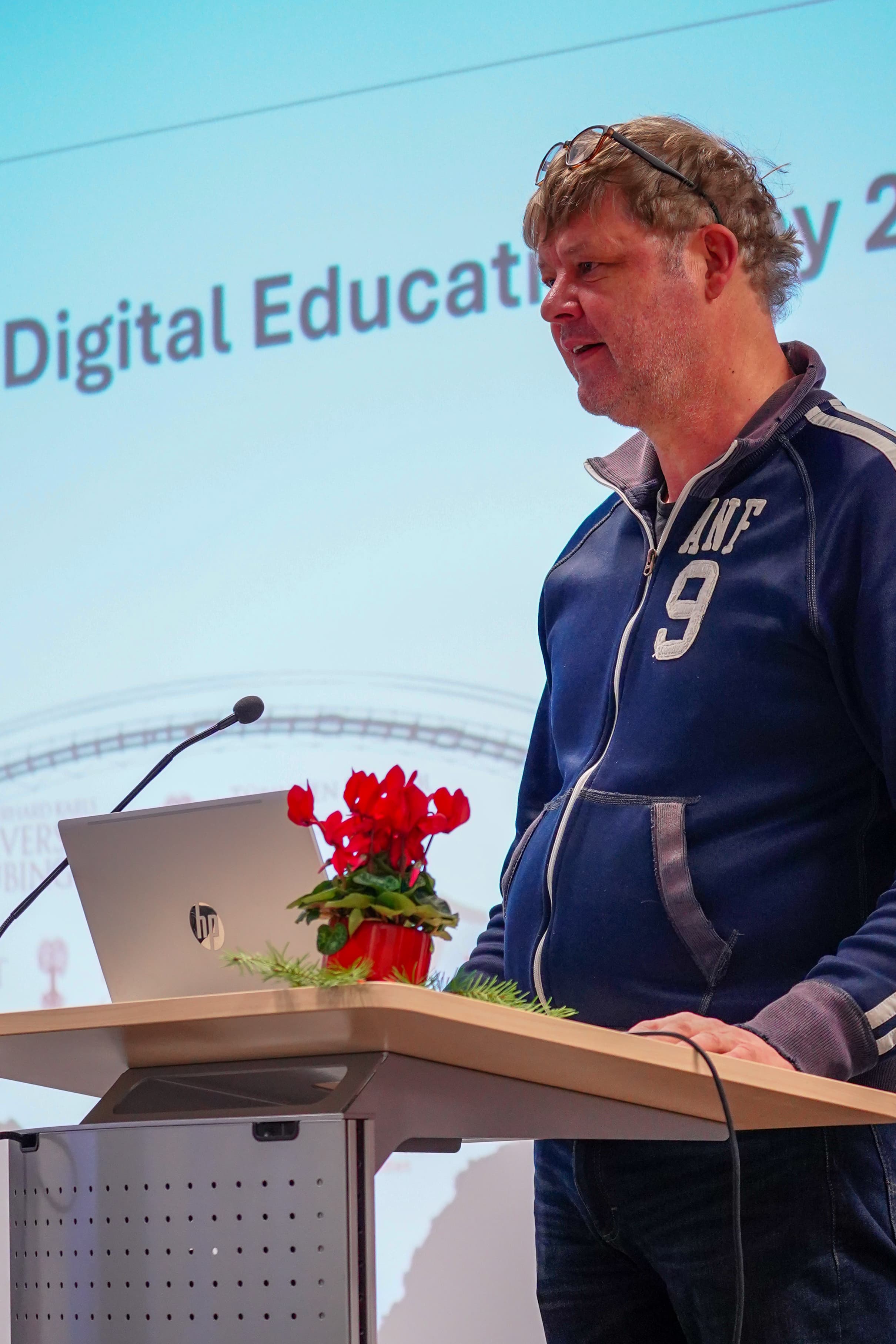
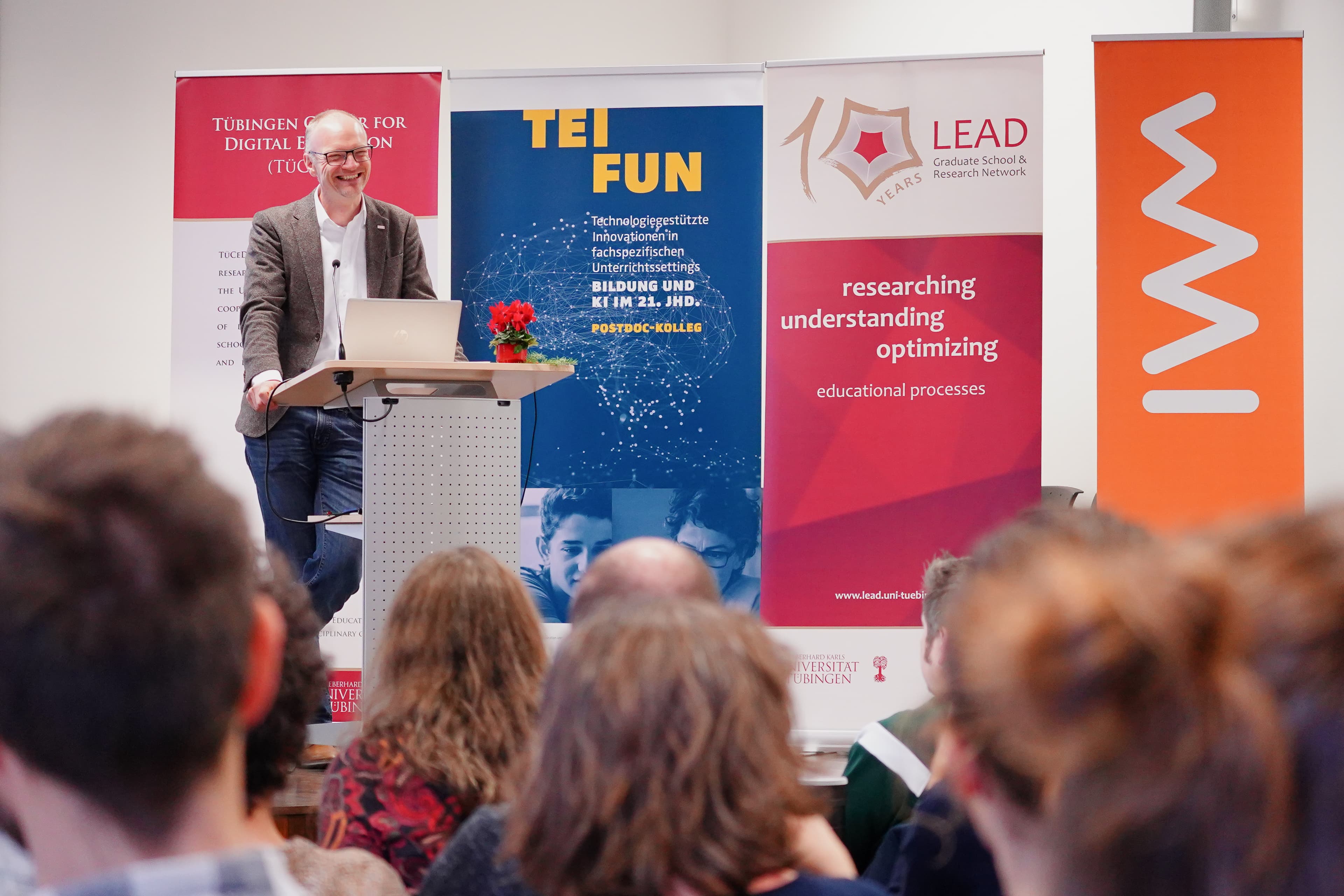
Prof. Dr Samuel Wagner, The Vice-President for Sustainable Development and First General Deputy of the President, highlighted in his welcome address the multitude of current initiatives and events that create interdisciplinary links between AI and education.
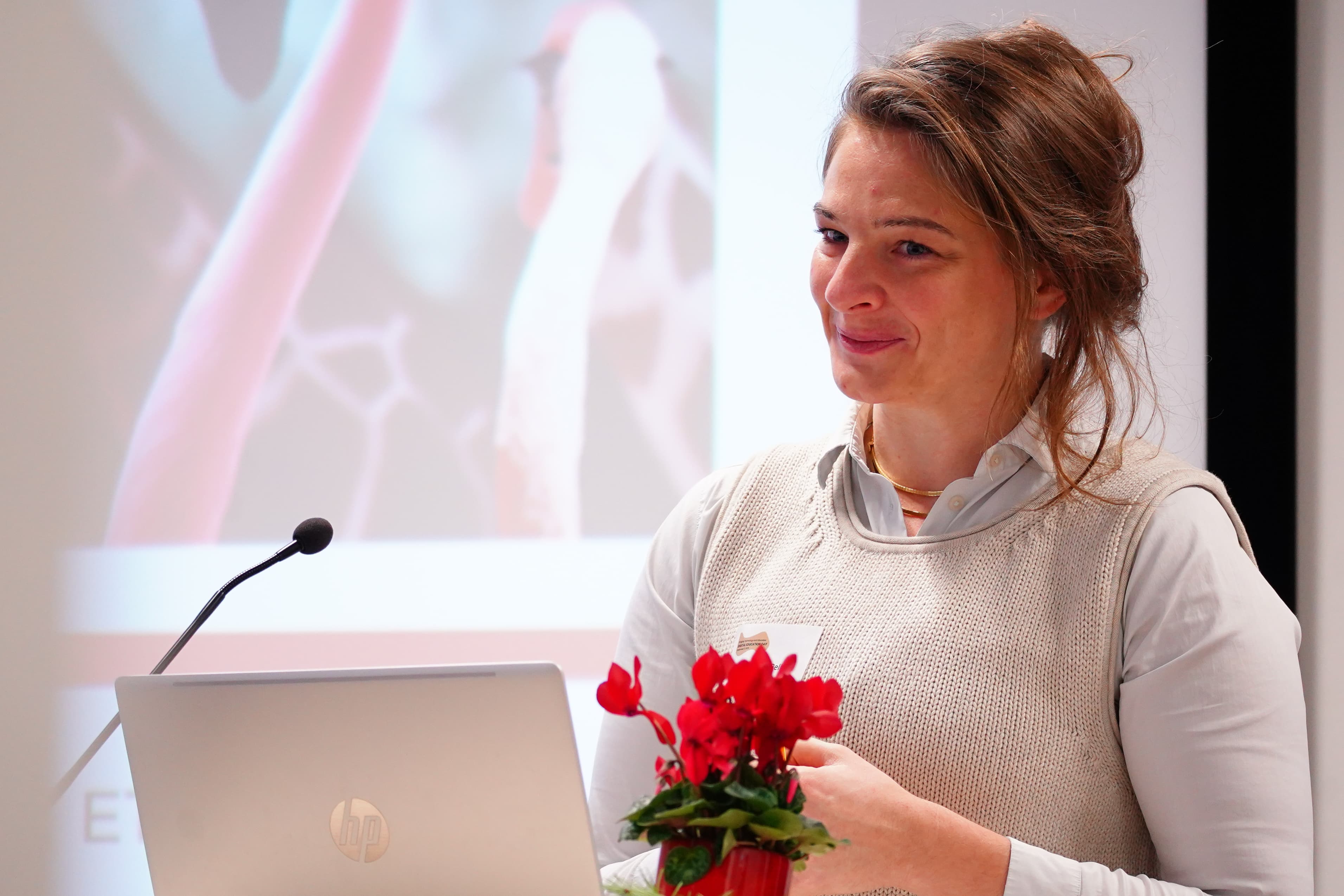
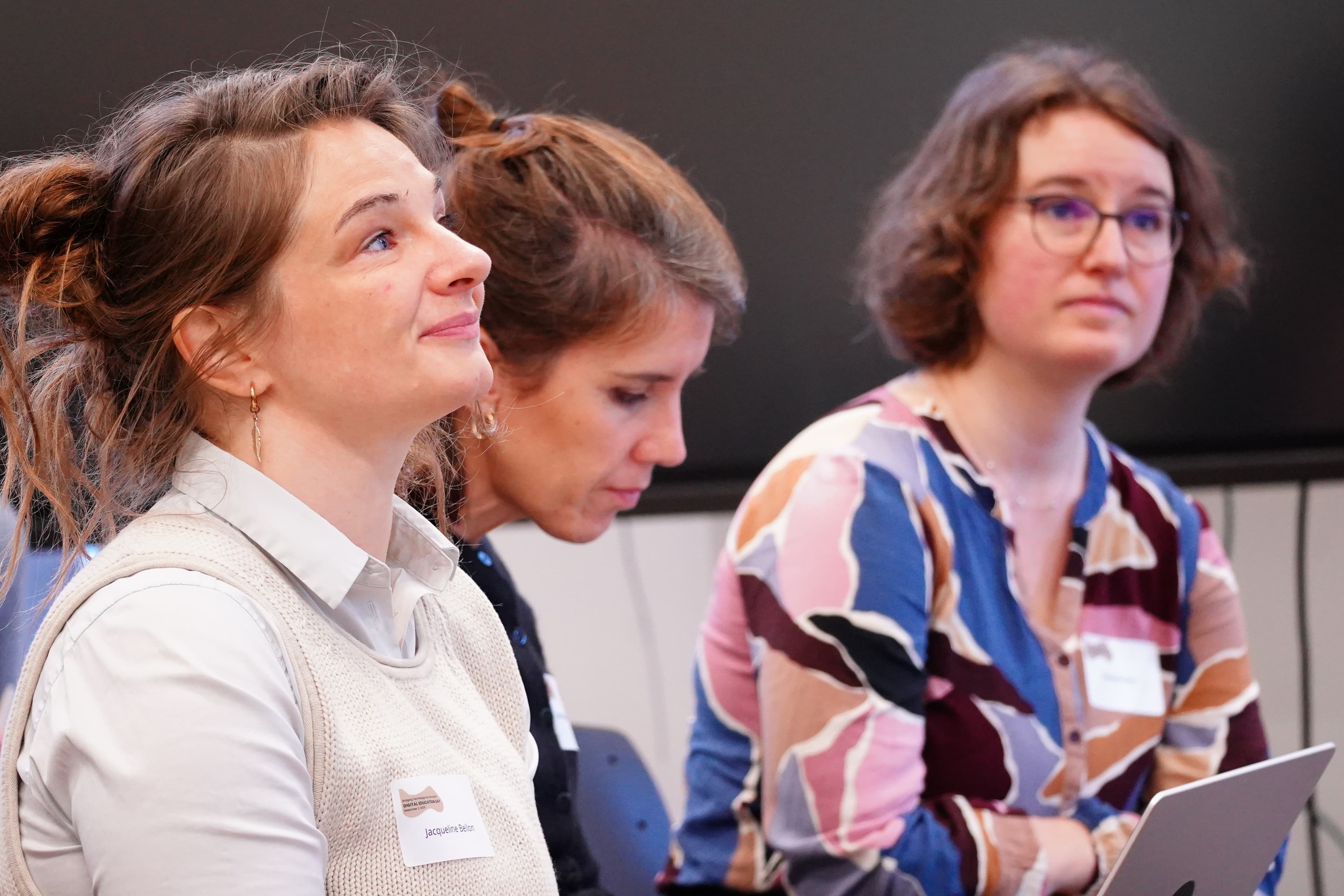
Inspiring keynote speech by Jacqueline Bellon
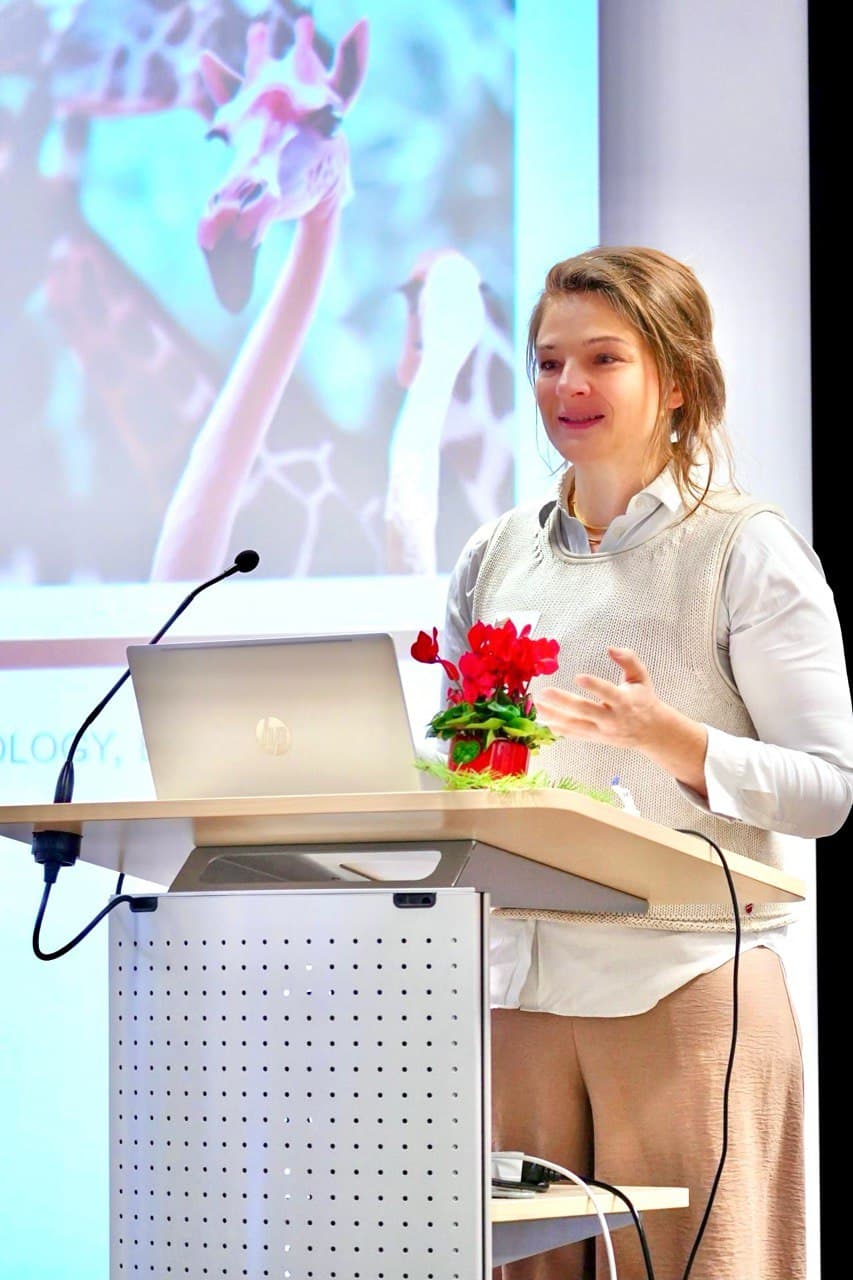
Technology philosopher Jacqueline Bellon from the International Center for Ethics in the Sciences and Humanities at the University of Tübingen (IZEW) deals with topics related to robotics and AI, collaborative research and innovation, and teaches at various universities on issues of technology and social philosophy, epistemology, science and cultural theory. She teaches digital literacy and critical AI literacy in various formats. She is currently completing her dissertation at the University of Darmstadt on the French philosopher Gilbert Simondon.
Risks of generative AI and the role of education
In her keynote speech, Jacqueline Bellon warned of the ethical and epistemic risks of generative AI. She made it clear that the current flood of stereotypical, fabricated or simply false synthetic content, as well as the unchecked “cognitive outsourcing” of work steps by teachers and learners, poses a challenge to academic and general social knowledge production and transfer. Bellon also emphasised the need to specifically promote critical and fundamental skills in education and to ensure the quality of educational practice – including by supporting the freedom of research and the independence of educational institutions from monopolised technology providers.
‘Only if we do not ignore technical and social realities and their connections, but understand what we are dealing with, can we act in a self-determined manner,’ said Jaqueline Bellon.
Dialogue between science and educational practice: a day full of inspiration
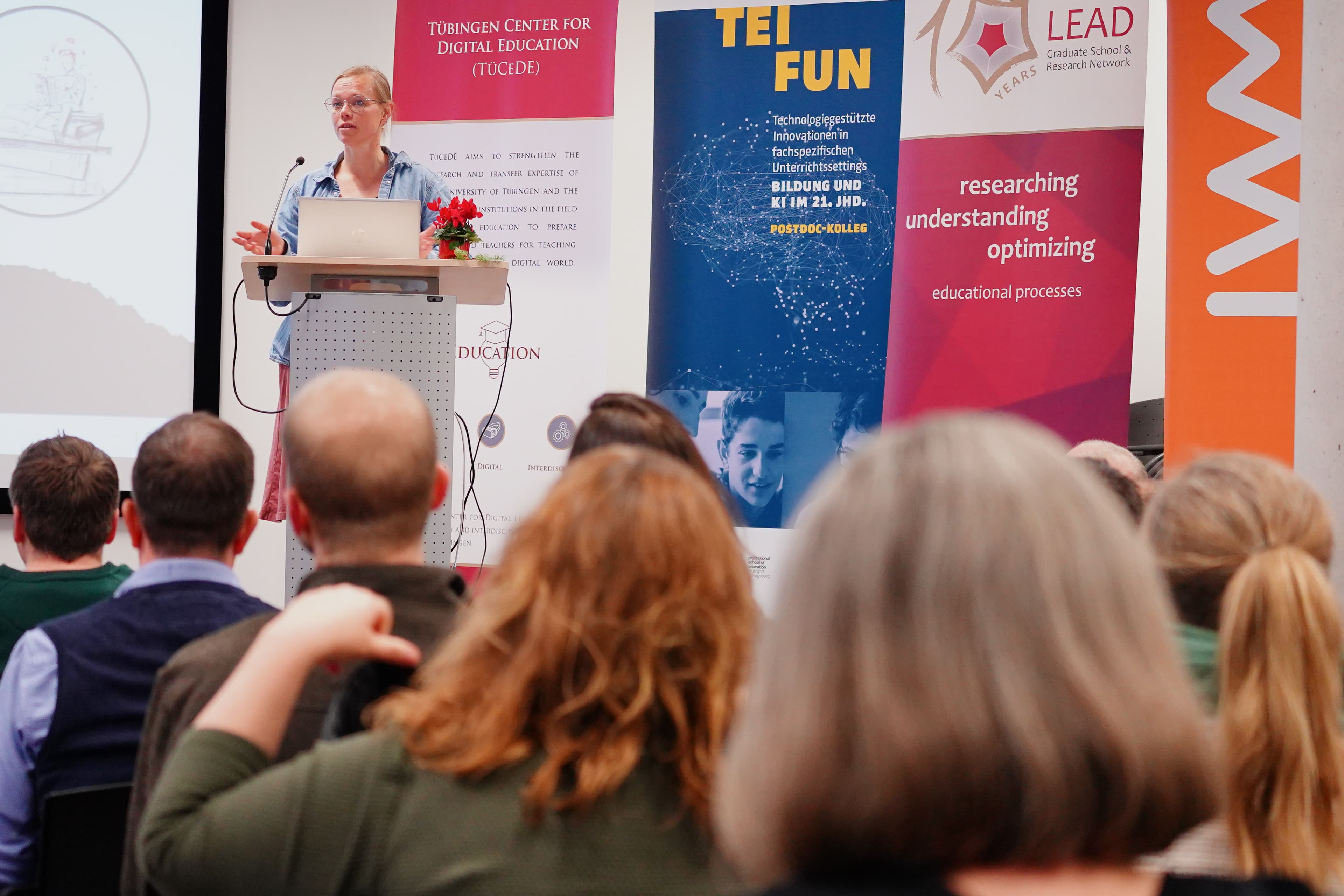
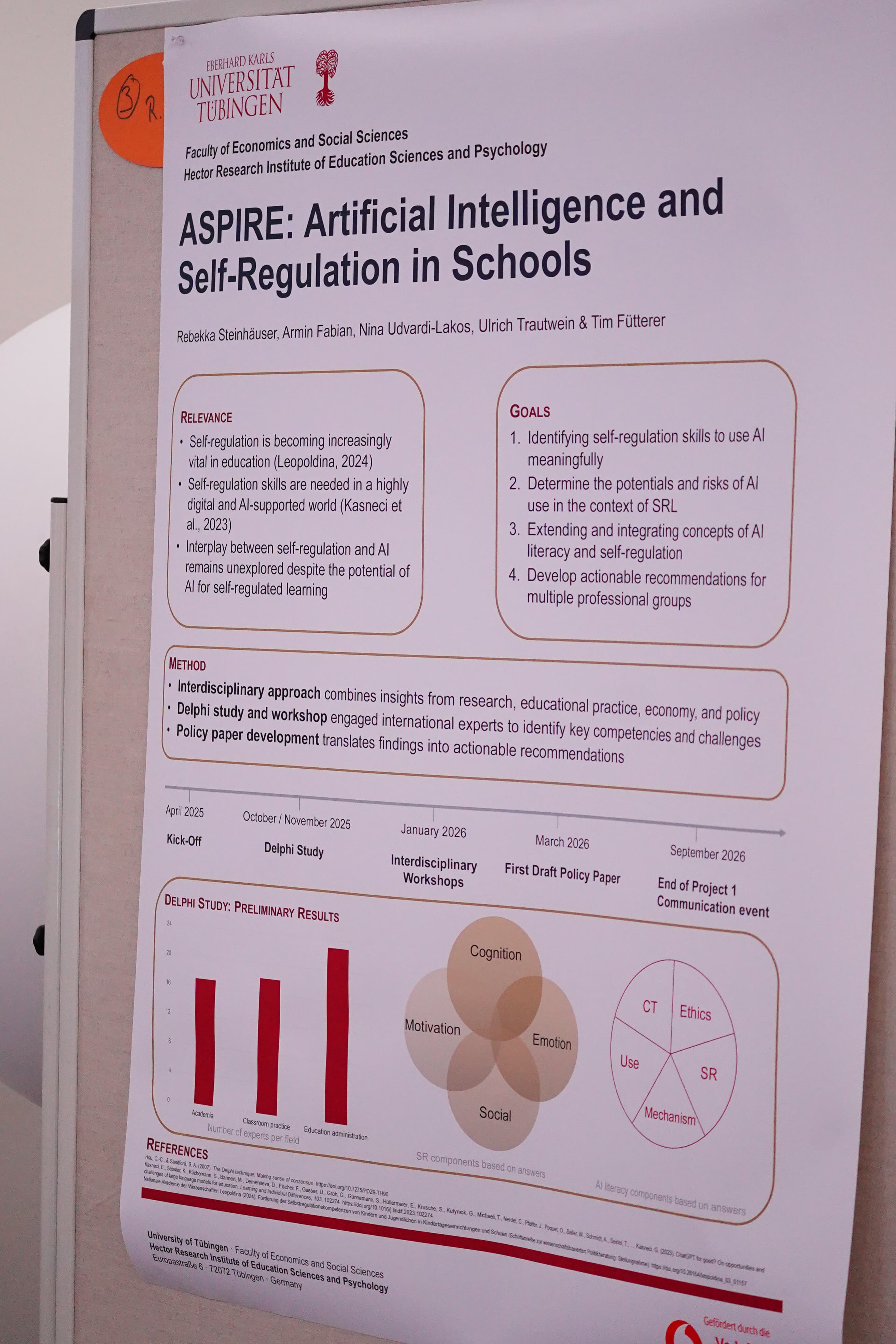
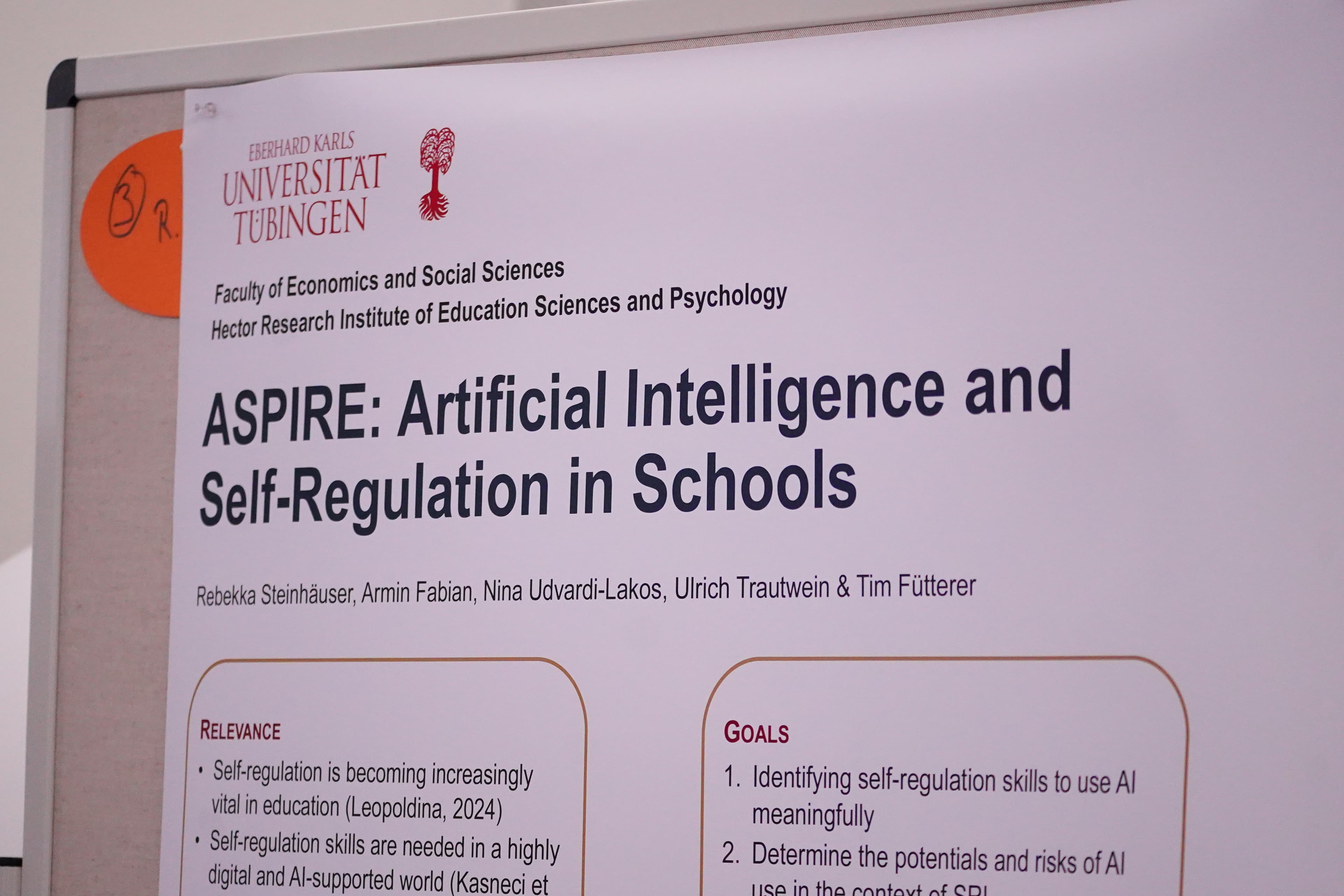
The day offered numerous opportunities for exchange and dialogue between science and educational practice. One highlight was the workshop ‘Education and Technology – how to communicate successfully’ by Dr Caroline Schmidt (Federal AI Competition / BWKI), supplemented by contributions from many other experts. In addition, 19 exciting projects were presented, including many on AI-supported and immersive learning opportunities. Projects from the Future Innovation Space at the IWM were also represented.
The Digital Education Day is a joint event organized by the Tübingen Center for Digital Education (TüCeDE) together with the Tübingen School of Education (TüSE), LEAD Graduate School & Research Network, and the Leibniz-Institut für Wissensmedien (IWM).