News
When and how do we decide to use AI?
11 Aug 2026
Nico Ehrhardt successfully defends his doctoral thesis on the use of AI
When do people turn to artificial intelligence – and when do they prefer to rely on human expertise? Nico Ehrhardt addressed this highly topical question in his doctoral thesis at the Leibniz-Institut für Wissensmedien (IWM). His findings show that whether people use AI, follow its recommendations or even leave decisions to it does not depend solely on the extent to which they trust the technology.
Three aspects of AI use
In public discourse, attitudes towards AI are often portrayed as a matter of acceptance or rejection. However, Ehrhardt’s research shows that the relationship between humans and AI is significantly more complex. In several studies, he examined three different aspects: whether people choose AI systems as a source of advice or support at all, whether they adopt AI-generated suggestions, and their general willingness to delegate tasks and decisions to AI. His findings revealed that, whilst AI systems are often perceived as less trustworthy and riskier than human experts, they are nevertheless preferred in certain situations. The decision for or against AI is therefore not solely a question of trust.
Various factors also come into play when it comes to whether people adopt AI-generated suggestions. A key factor, for example, is how useful users perceive a system to be – or whether it strikes them as rather alienating or ‘creepy’.
The use of AI: more than just a question of trust
Furthermore, trust and acceptance do not automatically mean that people will delegate tasks to AI. Rather, the decisive factor is a fundamental willingness to transfer responsibility to a technical system.
The doctoral thesis makes it clear that the integration of AI is not a uniform process. Whilst perceived usefulness, trust, willingness to delegate and actual use are interrelated, they are not one and the same. The central question is therefore not whether people accept AI, but under what conditions, for which tasks and with what degree of human control they wish to use AI.
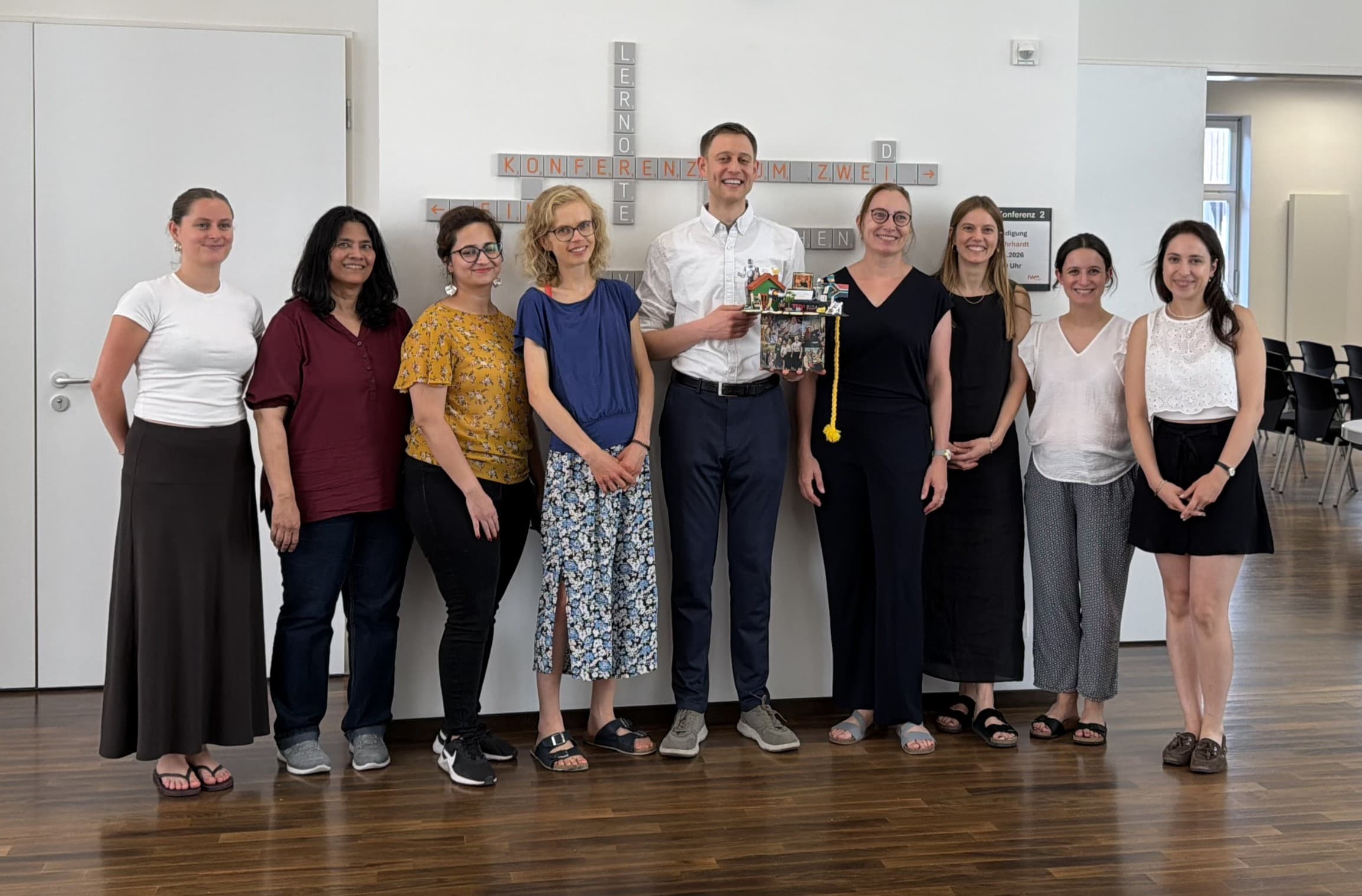
On 4 August, Nico Ehrhardt successfully defended his doctoral thesis. He looks back positively on his time at the IWM as part of the Everyday Media lab: “The Institute was the ideal place for me to complete my doctoral thesis. I particularly appreciated the warm working atmosphere and the good balance between care responsibilities and work. I am very grateful for the support and the many wonderful encounters.”